The Staypuft Plant

  Marshmallows are as much a part of summer as picnics, fireworks, and baseball games. There’s nothing better than one of those puffy white treats slow roasted to a rich golden brown hue over the campfire (although some slackers prefer to turn them into Tiki Torches before consuming them).  As a prominent part of the August marshscape, their amazing pink blossoms also provide nourishment for the soul.

  O.K., let’s back up a minute.  I realize that I am getting ahead of myself and mixing up my mallows and my readers.  I am actually referring to two different marshmallows here.  The first is found in a bag at your local grocer and morphs into a “Ghostbusters” character, while the second is found in your local wetland and morphs into a stunning tropical beauty.  The first is linked as one word, while the second is divided into two – Marsh Mallow. While it may seem only a coincidence, the relationship between the two is closer than you may think.

  The Marsh Mallow in question is more properly known as the Swamp Rose Mallow (a mallow of the marsh). This shrubby perennial grows in wetland conditions and pretty much hides out among the cat-tails throughout the growing season. During the mid summer blooming time it screams for attention.  Take a look at this photo of the bloom and I think you’ll agree it’s a real looker! The flowers are 4-6 inches in diameter and graced with 5 tissue-like gentle pink petals. A central spike is covered with anthers (the male part) and terminates into five pistils (the female part).

  The attention being screamed for is that of pollinating insects.  Take another look at the previous picture, or the following one, and you’ll note that the blossoms are crawling with attention in the form of flea beetles. While I’m sure they appreciate our gaze with some form of inanimate plant psyche, it’s the beetles they are after.

  The usual human reaction to this bloom (after the “wow”) is that the flower looks like a garden Hibiscus.  At this point, were you and I standing in front of one, I would whip out a card with the scientific name on it and confirm your suspicion.  The Latin name for this pink variety is Hibiscus palustris.  The garden Hibiscus, this Rose Mallow, and even those old fashioned Hollyhocks are all in the plant family called Malvaceae – the Mallows. There are over 1,000 kinds of plants in this group and most of them are tropical – thus the exotic appearance of our marsh plant. The family name means “soft” and certainly is appropriate when one considers the Staypuft connection.

 Before we turn our attention to the puffy white confection, there are a few more things I’d like you know about the Swamp Rose Mallow. Take a look at this photo of a fresh flower next to a wilted one.  The mallow is one of the few plants whose wilted petals are actually more colorful than the fresh ones. The limp blossoms look like crumpled art tissue ready to be applied to a Homecoming float.  Eventually, the fertilized flower sheds its petalware and concentrates on the seed head – a compact five parted package (see here).  By late fall, these pods turn dark brown and open up like yucca pods to distribute their seeds.

  Another member of the Mallow family, the Marshmallow, is responsible for the name of the sugary confection of the same name. This European plant doesn’t hold a candle to our Mallow in terms of floral beauty, but holds a secret within its mucilaginous root. Mucilage is a fancy term for a jelly substance and all mallows, including ours, have the gelling substance in their roots.  The Marshmallow happens to have a very high concentration of it.  This property has allowed it to be used for candy making for centuries. The Egyptians used it, the French used it (pate de guimauve), and the British as well. Those treats can collectively be called “marshmallows.”

  Traditional marshmallow recipes called for the powdered mallow root, egg white, cane sugar and vanilla extract.  Since the mid-1800’s, commercial marshmallow manufacturers have resorted to other gelling agents to do the job.  Out of employment, the original marshmallow plant now shares only a name with the Staypuft Marshmallow Man.  So, by virtue of being a cousin twice removed, our Swamp Rose Mallow can claim the title as well.

A Fallen Giant

  The passing of a great oak is not something that should be taken lightly.  Not far from my house, one of these noble life forms was brought to the earth, and – although I didn’t know the tree personally – I feel compelled to write a short eulogy in its honor. 

  A combination of small internal forces combined with overwhelming external ones to bring down the centuries old White Oak.  Internally, it was riddled with the passages and tunnels of Carpenter Ants who ate away at the support foundation. Hundreds of generations of these large black ants had chewed away at the stout heartwood -the dark inner support wood of the oak – and robbed it of its essence.

  As trees grow, the outer sapwood responsible for transporting sap to and from the root system is eventually relegated to a crucial support role as time goes by.  Resins eventually build up in the channels and solidify the wood into an iron-like core. Tons of living tissue in the form of leaves, branches and acorns are supported by the heartwood. This White Oak heartwood is legendary for its strength and resilience. The wood has long been on the A-1 list for old time ship builders, barrel makers, and furniture makers.

  Our tree never had to offer up its heartwood for human use, however.  Instead it continued to grow over the better part of 800 seasons and 200 years.  Without the interference of humans, disease, weather or insect damage, White Oaks can reasonably expect to live over 500 years and therefore have the capability of being among the oldest living things on earth. Achieving this rank is not an easy thing to do.

  White Oaks produce acorns every year, but only come out with a big crop every 4–10 years. The parent tree for our fallen giant had to run a gauntlet of factors in order to insure that its seeds survived into tree-hood. Observers have noted that a typical tree can produce over 23,000 acorns in any given season, but from the time they fall from the tree their survival chances begin to take a precipitous plunge.  Ten percent of the acorns are no good to begin with and a most of the rest are eaten by deer, squirrels, or weevils. Of the very few that survive intact (perhaps buried and forgotten by squirrels) only 6% are still able to sprout after six months. This leaves us with only a handful of acorns capable of sprouting the next spring. Of those that do sprout, most of these die from drought, browsing, or disease.

  Given the above statistics, the fact that our oak even became a tree was a miracle in itself.  At every point in its life, there was danger from wind, lightning, disease, or the lumberman’s axe. Since White Oaks are legendary for their attraction to lightning, it is small wonder that the Druids associated them with the God of Thunder.  Oddly enough, they were also known to place an acorn on their window sills to prevent lightning strikes.

  As far as I know, no local Druids gathered at this tree for any ceremonial purpose, but it avoided Thor’s wrath none-the-less.   Slowly but surely, the tree advanced to the stage of a giant along the edge of an open field.  With no nearby competition, the tree was able to spread out its huge side limbs – which became nearly as large as the main trunk. The passage of a road a century ago and construction of a house some 50 years later left it intact.

  How many fox squirrels gathered the annual acorn crop, how many spring warblers sought insects among its branches, how many orioles suspended their basket nests from the branches we can only speculate.  That an incredible amount of minute insect life lived, died, and thrived within the protective canopy there can be no doubt. The generations of Carpenter Ants set up the final act.

  A few weeks ago, a tremendous wind storm whipped through the region. It was Aeolus, not Thor, which rocked the mighty tree beyond its breaking limit.  The unequal balance created by the huge side limbs was no longer supported by the heartwood and the oak tipped to the side and split up the middle (see it here).  This was a fatal wound and the end of a long life.

  A few of the offspring of this tree have survived the initial stages of life’s journey and it is now their job to continue the line.

A Conversation with a Screech Owl

  I ventured out into my front yard last night to take in the symphony warm-up.  A mid summer’s evening is a soundstage for Field Crickets, Snowy Tree Crickets, Cicadas, and a whole host of other insect crooners. Their season is just beginning, so this time of year equates to the tuning session just before the orchestra plays – the response to the Concert Master’s “A” string. By the time September rolls around the nocturnal orchestra will rise to full symphonic intensity under the direction of nature’s baton.

  It was around 9:20 in the evening and the intense heat of the day still hung heavy in the air.  The sun had fallen into the distant sea some time ago and the first hint of star shine was breaking through the darkening veil of night. A leaden gray blue sky starkly silhouetted all the tree branches against it.  Slight puffs of breeze elicited hushes sounding like waves on a beach. Between the crickets, the breeze, a distant train and the faint rumble of a Harley I detected another familiar sound. Barely audible above the hum of life there was a low whinny call wafting it’s way over the fields.  The sound was issued from far off and was so low as to seem imaginary or ghost-like.

   I held my breath to better pick it up and the whinny repeated. It started high and descended into a hollow tremulous end: “Wheeeeeeee- eeeeewwww    Wheeeeeeee- eeeeewwww.”  Though the roar of a passing car obscured the next few calls, the spirit call was still there as the auto whine dissipated down the road.  This night I was honored with the presence of a Screech Owl. He was practicing way off in the wings (every pun intended, by the way), so I decided to have a few words with him and see if he couldn’t come a bit closer. I called out his name.  Normally this is not good etiquette for orchestra goers, but acceptable if the inquiry is executed in the proper tongue.  I speak a bit of Screech Owl, so felt justified in the effort.

 Cupping my hands around my mouth I aimed a verbal imitation of the “wheeee” call in the direction of the unseen owl – ending with a long gurgled “ewwwwwwwwwww” using that flippy dingy thing in the back of my throat (the epiglottis).  I’m not entirely sure what I said, only that it basically mirrored whatever he was saying. To his “I am here, I am grand, look at me, here I stand,” my mimicry probably comes out as “Cheese is dog, swollen feet, my elephant is chow dungaree.” 

  I waited for a second, but heard no response. I looked around to detect any movement in the sky above, but only noticed a silent Shamrock spider above my head. She was busily engaged in weaving her web. Every detail of her plump body was sharply defined in silhouette. I puckered up again to call, but made sure to put a different emphasis on the end note this time –perhaps inferring a slightly different meaning.

  Again I waited. The spider continued her chores and a lightning bug flashed but there was no verbal answer. This time, a motion caught my eye as the owl streaked over the sky space and landed in the Red Pine to my right. It immediately began to call for further response. It worked.  Now it was time to carry on a decent conversation.

  Eastern Screech Owls are the smallest resident members of the owl clan in our area. They are about the size of a large can of soup (about 8 inches from beak to tail end) with a wingspan barely exceeding 18 inches.  They are very common, but as nighttime hunters are rarely seen. In daytime, they appear as variations of mottled gray or red-brown with prominent “ear” tufts and huge yellow eyes, but in dim light they are evasive shadows. Take a look here to see what they look like and to hear that mournful call (click on the three call recordings).

    Now that I had his attention, I let out a “Wheee” call to set the tone of the conversation.  From the depths of the Red Pine, the owl answered with a new set of notes sounding like a long muted trill.  Although it was issued from only 30 feet away, the call had a ventriloquist nature to it and sounded far more remote.

  We carried on for a few moments, but my responses were getting weaker as my mouth dried out.  With each call I was sounding less and less like an owl and more and more like a cheese dog with swollen feet. The owl continued to be indulgent and curious, however, and flew back over my head to the maple on my left. I saw it land, but it instantly disappeared in the shadows.

  At this point I was sure we were both doing the same thing. I rocking my head from side to side trying to get a fix on the bird and he trying to figure out the exact nature of this huge mutant ground owl below him.  His final call was clear and confident: “Wheee-eeew, Wheeee-ewwww, ew ew eweweweuuuuuuuuu….”  By this time, I had no more moisture in my mouth and I tried to answer, but it stuck in my throat.

  As if to indicate that the game was up, the Screech Owl limb-hopped to a location just over my head and paused before launching into a silent departure.  The night returned to the crickets.

  I’m guessing my heavy accent gave me away.

House Pest Guest

  Have you ever wondered how a centipede can walk without tripping itself? As a two legged beast that often entangles his own appendages, I have pondered the question. The answer is, for the most part, co-ordination – the legs are put forth in a ripple pattern with each leg firing off a nano-second after the one before or after it. All this is controlled by a tiny prick spot of a ganglion. In the most of these creatures, the legs are short enough so that they don’t overlap that much either. It also helps that centipedes don’t have 100 legs to begin with; despite their name (millipedes do not have a million legs either). We are talking tens of legs here, which is plenty.  For those of us with a larger than pin prick of a brain and only two legs to ripple, centipede pedulation is an admirable thing.

  Unfortunately, admiration is not the reaction that most folks have to a particular centipede that pre-ambulates in our kitchens at night. The sight of a House Centipede dashing off – without tripping – when the light is switched on elicits high noises and tribal dancing on our part.  Often a loose shoe accompanies the routine.  This object is smacked down on the counter or the floor right behind the fleeing creature who hauls abdomen and disappears into the nearest corner.

  House Centipedes came to us from the Mediterranean and were first recorded here in 1849. As perennial uninvited house guests since that time, they go about their nocturnal lives undetected in your walls and under your sink. It is only when they are surprised or find themselves trapped within the smooth confines of a bathtub that we come across them and the primitive dance ensues. Those spider like legs are the problem.  They make them look three times larger and creeper than they really are.  House Centipedes are really good house guests not house pests.

  As respectable centipedes, they have multiple legs (look here and here).  There are thirty in all – 15 on each side- with an extra set modified as fangs.  Each set of legs is longer than the one preceding it.  The rear pair is 2 times the length of the first pair. This not only allows for longer legs and faster speed, but solves the tripping problem in that the foot end of each leg occupies a different part of the race track (or kitchen counter).  Such speed abilities place House Centipedes in the category of “nocturnal raptors” (not rappers). They chase down prey like tiny wolves.

  Two fang-like front legs, called forcipules, are plunged into their chosen victim and paralyzing venom is injected (see face detail here and underbelly view here). Small, but significant mandibles equipped with three teeth each, eventually make the prey disappear.  I don’t normally look at “U Tube” sites on the internet, but just in case you’re interested here’s a short one showing a House Centipede devouring a spider (I warn you, the excitement content is minimal). 

  A list of their prey victims reads like a who’s who of household pests: flies, silverfish, bed bugs, cockroaches, and a few spiders.  Except for the spiders, all of these critters are truly damaging house pests.  So, you see the House Centipede is a friend after all – a creepy looking friend – but a real asset.  We all have a few creepy friends that turn out to be much more valuable than they appear. This rule does not apply to my daughter’s boy friends, however.

 House Centipedes do not bite people and will only do so if severely provoked. Their bite has been equated to a bee sting. There is nothing really dangerous about them.

 If you looked at the pictures, you probably noticed that House Centipedes appear to have very long antennae at both ends of their body.  Actually, the last set of legs are super long and adapted to act like antennae to sense movement.  The real antennae at the front of the head are used for both touch and scent detection.  Add a pair of fairly large eyes (something unusual among centipedes) to the fray and you can see why they react so quickly when discovered.  They see you, the light, the shoe and the corner all at the same time.

  An obscure 1904 reference made an interesting comment regarding the fleeing tendencies of House Centipedes. They appeared to deliberately run at women, according to this piece, because the space under their long dresses provided what seemed to be immediate shelter!  No doubt their innocent attempt to get away was severely misinterpreted.  Today long dresses are out, but we continue to misinterpret the leggy beasts.

Pancake Pig

    In order to fully understand the Spiny Soft-shelled Turtle, you must change your way of thinking about turtles in general. It has been a few years since I’ve seen one of these remarkable creatures, so was delighted when one was brought in the other day. A Good Samaritan rescued it from the centerline as it was in the risky process of crossing the road. Take a look at this portrait of the wanderer herself, and you’ll agree this is one odd looking beast.

  While it is not unusual to find turtles crossing the road, it is unusual to find a Soft-shell doing it. They rarely leave the water and venture onto land only as far as absolutely necessary in order to lay eggs or bask in the sun.  In both cases they remain within a few energetic paces of the water’s edge.  When startled, they can be incredibly fast at closing the gap to their liquid refuge. Seeing a Soft-shell doing such a sprint will cause you to put aside your notions that all turtles are slow on land.  I believe this individual was on a mission to find a new waterway after its old place dried up. It was a bit chapped. Land travel is risky business for a turtle with sensitive skin and no external shell.

  Most turtles have a solid bony shell which serves as their refuge for head, feet and tail when danger looms. Their shell consists of a layer of bone, directly connected to the ribs, covered with a layer of dry skin plates called scutes. The Soft-shell has relegated its shell to a central disc of bony plates covered over by a thick layer of tough leathery skin. They cannot completely withdraw their body parts.  Take a look at this detail shot of the olive green skin on the top “shell” (carapace) and this shot of the brilliant white underside (plastron). The overall appearance is that of a speckled pancake with the texture akin to leather or vinyl. It is tough and rubbery but susceptible to cuts, scrapes, or tooth punctures.

  To make up for this lack of a protective shell, these turtles pack a vicious wallop in the form of a lightning fast bite. Sharp edged jaws and a long neck combine for a convincing “one-two” defensive move. The particular turtle that I photographed happened to be a gentle soul and allowed herself to be handled, but don’t expect the same from others of her kind. Female Soft-shells are covered with a sparse array of simple spots or blotches on their shells, while males are adorned with open circle spots called ocelli (that’s “o-sell-eye”, a term meaning eye spots).   In their native element, these disc shaped turtles employ their shells for a much more refined purpose that mere protection.  Since they live in sandy or gravelly bottomed lakes and rivers, the shell pattern perfectly blends them into that environment. They habitually settle into the bottom and await prey, in the form of fish or aquatic insects, to drift ignorantly over them.

  Take a look at this view, and you’ll see where the “Spiny” part of the name comes from.  There are a dozen or so bumps or cones projecting from the leading edge of the shell.  I personally wouldn’t call these things spines, but then again I wasn’t around to voice that opinion when these things were named.  There are other kinds of soft-shells that don’t have these bumps, so they do serve as an irritating identifying feature if nothing else.

  Faced with the necessity of spending extended intervals of time lying motionless on the bottom, the soft shell has devised several ways to breathe without giving itself away. Take a look at this detail shot of that wonderful little breathing straw of a snout. These living snorkels can extend their long necks to the surface in order to poke their pig like nose into the air for a quick breath – without moving the rest of the body and blowing their cover.

  The snorkel method only works in very shallow water, so in deeper environs this turtle converts to skin breathing. Like a hybrid vehicle, it converts from atmospheric air via the lungs to water bound oxygen via permeable membranes in the skin. In essence, the skin acts like a giant gill and absorbs oxygen directly from the water.  The thin skin layer of the mouth interior and the lining of the cloaca is especially suited to this kind of respiration.  They move water back and forth in the mouth cavity by means of a hyoid bone which pumps water in and out (this is pretty much what fish do). As long as the animal doesn’t exert too much effort, lung breathing is downright unnecessary.

 Just to clarify things, the cloaca is a nice term for anal opening, so the long and short of it is that the Spiny Soft-shell  breathes through both its front and rear end. Thank God Jacques Cousteau invented the aqua lung, otherwise we humans might have been required to develop a method of anal breathing for our extended underwater dives. We’ll leave that impressive skill to the likes of the pig nose pancake.

Royal Blood

  As with all royalty, there are secrets regarding the Queen Anne’s Lace that may never be resolved. The public persona of this common plant, however, is very clear. You’ll see the familiar white blossoms gracing nearly every roadway and un-mowed field. She is found in your garden as both crop and uninvited weed.  She is better known to commoners throughout the world as the Wild Carrot (Daucus carota) – the progenitor of the domestic garden carrot.

  Just in case you don’t know what I am talking about, here’s a picture of one of the flowering umbels of this plant (also, for further reference, here’s a link to a great website dedicated to it). The Wild Carrot has few of the obvious qualities of its domestic spawn – the Bugs Bunny Carrot. The familiar orange garden carrot is the result of intense genetic selection which focused on the root portion of the wild plant. The name “carota” means red in the Celtic tongue and comes from the red/orange pigments that make a carrot root so noble and carroty. The original wild plant is still with us and it has traveled across the globe where ever people have tread. It has a long white root, not an orange one, which is rather stringy in texture. You’ll need to pull it up out of the ground and give it a squeeze or a snap to allow the distinctive carrot smell to issue forth and proclaim its blue bloodness.  

  All of this domestic talk is fine, but let’s get to the scandalous part. There is a mysterious stain within the bloom and an uncertainty within the name.

   I used the term “umbel” when pointing out the flower of the Q.A.L., so I’d better explain. An umbel is the botanical term for a flat-topped cluster of flowers. The Queen Anne’s Lace is a classic example of such a thing. The flower head cluster is actually made up of 1,000 to 40,000 individual white flowers. As a whole they take on the form of a delicate white lace doily and this is the reason for the Queen Anne’s Lace moniker.

  The controversy about the name regards exactly which Queen Anne we are talking about. In some parts of the world, the lace making queen in question is Anne Stuart.  This Anne assumed the English throne in 1702 (see a picture here). In her portraits she doesn’t appear to be especially lacey or delicate, but she apparently engaged in lace making.  In other parts of the world, the Queen Anne name refers to the mother of the Virgin Mary and the Mother-in-law of Jesus. Among Saint Anne’s many patronages, lace-makers hold her in special regard.

  The English Queen was Anglican – ascending to the throne due to the Settlement Act intended to exclude Roman Catholics. Saint Anne is revered in the Catholic Church and has an especially devout following among the French Canadian population of North America (St. Anne’s parish being the oldest in Michigan).  So, it appears that this name thing may boil down to religious preference.

  Take a good close look at each umbel of the Wild Carrot (note the use of this neutral name in light of the above discussion) and you’ll see that there is a single odd purple flower at the very center (see here).  This misshapen and sterile bloom looks like a drop of dried blood on the lace. The “rest of the story” – as Paul Harvey would say – is that our royal lace maker (whoever she was) accidentally pricked her finger and a precious drop of her blood dripped onto the center. The lacey flowers forever bear this permanent mark as a reminder of the incident.

  I’d like to resolve this thing with a nice tidy answer revolving around this weird little purple androgynous flower, but I can’t.  It would be nice to say that the royal purple surely represents the English Queen, but equally as nifty to say that one drop of Saint Anne’s blood would be far more significant that that of Anne Stuart. I would like to say that the purple center bloom is there to attract insects. From a distance, the dark flower does make it appear that an insect is on the flower cluster.  Some have argued that this encourages other insects to come and nectar – a decoy of sorts. Unfortunately, this has not been proven and the reason for the structure is unknown.

  DNA will not help us in this quest to determine the mystery behind the tiny blood drop on the white lace.  It is royal blood and that will have to hold us for now.

True Blue?

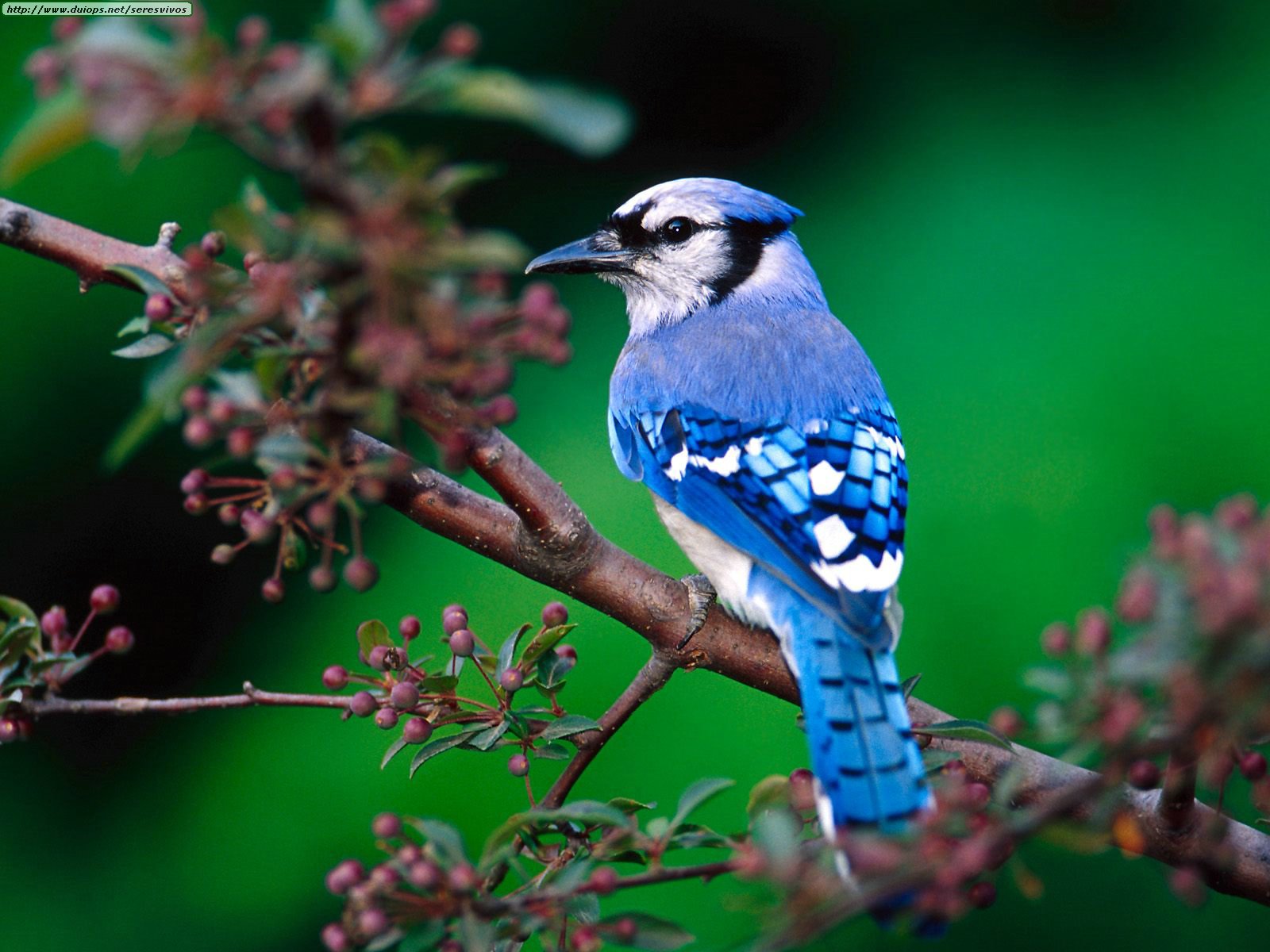
  Nothing is as it seems.  This feather (see here) is actually from a Blue Jay, and it is actually sitting on a Dogwood leaf.  The leaf is really green with chlorophyll, and components of the feather are really white and dark gray, but the blue color is an illusion. This single secondary wing feather reveals that Blue Jay blue is not really blue. Other famous blue birds such as the Eastern Bluebird (see here) and the Indigo Bunting (see here) are equally untrue in their hue. The proof is in their plume particulars.

  Color is a gift from the whole white light of the sun. White light is a combination of Red, Orange, Yellow, Green, Blue, Indigo & Violet as any rainbow will tell you. All color is the result of that light reflecting back into our brains. True colors – pigments – are chemicals that selectively reflect parts of the color spectrum of light. Cardinal Red, for instance, results from a pigment that absorbs all other light waves and only reflects the red spectrum. In other words, there is an actual red “thing” embedded in those red feathers of the cardinal.

  The blue color found on birds, butterflies and beetles is the result of something called preferential scattering – not from an actual blue “thing” or pigment. Animal blue is called “structural blue.”  This means that there are micro structures in the tissue that scatter light.  There are tiny air pockets in the keratin (the fingernail like substance that feathers are made of) that scatter the blue light waves. A dark background layer absorbs the red, orange, yellow, green light rays, so all we see are the shades of blue.

  To test the structural color idea, I took that “blue” jay feather and moved it around in the sun. As long as it remained in direct light, the blue remained true and intense. When holding up the feather and looking through it toward the sun, the blue disappeared.

  I came across this picture of a Purple Emperor butterfly that neatly shows the result of structural blue.  In this view, the right wing looks bright blue because it is scattering light.  The left wing looks brown because it is angled away.  Both wings are the same actual color, brown, but it takes the magic of light to turn on the radiant blue reflection. The Blue Jay, Bluebird and Indigo Bunting all suffer the same fate in similar light conditions – they are brown.

  I feel at this point we should leave this thing well enough alone. If I go any further, I might start getting into why frogs aren’t really green. Let’s just say that blue is blue even if it it’s not ..well, true blue. Our eyes, cameras and minds record it as so. The blue of the sky, the cobalt dazzle of the bluebird, and the beautiful blue of my wife’s eyes are really blue (and there’s no way I’m going to tell her otherwise).

Both Ends of a Butterfly

You could say that a story fell into my lap yesterday evening.  Well, if not exactly “fell” and not exactly into my “lap,” a freshly dead Red Admiral Butterfly offered itself to me. O.K., it didn’t technically offer itself either, but was there on the nature trail for me to discover. Its delicate wings were only slightly worn about the edges and the external body undamaged, so I took it in for a closer look.  I suspect a hungry Kingbird crushed the butterfly and accidentally dropped it – perhaps frightened by my approach.

  Earlier in the week, I had managed to sneak a close look at a Monarch Butterfly as she went about laying her eggs.  After several attempts, I managed to snap a shot of her in the act. Now I was presented with a week where I was witness to both the beginning and the end of butterfly’s life (two species, but both of the aerial butter persuasion). Here was an opportunity to pay attention to both ends of this insects life and anatomy.

  Take a look at my photo of the female Monarch laying an egg. Upon landing on the chosen milkweed leaf, she side stepped off the edge and curled the end of her abdomen around to come in contact with the underside. After a few seconds of blindly searching around with her ovipositor (egg laying organ) she placed a single egg on the leaf and promptly flew off.  She repeated this exact procedure multiple times while selecting different leaves in the milkweed bed, so I witnessed at least 10 egg placements within a few minutes. Over the course of her brief life, she will potentially lay over 300 eggs (one captive individual laid 161 in a single day).

  A little appreciated feature of this simple act is that the eggs are actually glued into place. Monarch Glue puts Gorilla Glue to shame. Take a look here to see a detailed view of a monarch egg (in actual scale they are only 1.2 mm high).  Note that there is a ring of bubbly dried glue at the base of the shell where it contacts the leaf.  As each egg travels down the ovipositor tube on the “way to the lay” it is positioned blunt end first.  It passes by a pair of glue glands where a sticky drop is neatly placed on the bottom and the package is lightly pressed into position.  The thick glue “fixes” immediately upon contact with the air, so our female is careful not to get any on her hind parts.

  Although this particular female can only expect to live a maximum of five weeks, her eggs will carry Monarch life into the following year. Held by glue and protected from weather on the underside of the leaf, the eggs need to remain in place for four days before they hatch.  These July eggs will result in hungry caterpillars and September adults that will migrate and survive into the next spring.

  From the beginning of one life out of the end of one butterfly, we now look at the beginning portion at the end of another. Any Red Admiral butterfly flying in late July should also expect to survive into the following year.  These cold hardy beasts hibernate through the winter as adults. My Admiral met a premature “end”, which led me to momentarily wonder if it was actually a “rear” Admiral (that was a small joke, by the way – usually annotated with a wink of the eye and the repetition of the words “end” and “rear” several times).  As a means of recovering from such a pitiful attempt at humor, let me state that the name of this species stems from the prominent red stripes on the upper wings. These marks faintly resemble the red chevrons found on the old naval uniforms of British Admirals.

  Take a gander at the underside of the dead Admiral’s wings in my photo for another point of view. Note the subtle orange, blue and black patterns and the micro wing scales rubbed off on my thumb. The proper way to hold a living butterfly, as well as a dead one, is to firmly grip the wings in this manner so that they don’t shift about and shed too many of their scales.  As a member of a group called the brush-footed butterflies, the Red Admiral clearly displays his set of soft bristled front feet in this view. 

  The next step in our discussion involves a pin, but not in the manner you might think. Ahead of the prominent eyes, there is a pair of fluffy face pads called palps which protect the delicate tongue which is at the leading end of all butterflies. In order to see that miraculous organ we need to gently tease it out.  Take a look at these two photos (here and here) and you can see how this is done.  The tongue is coiled up like a party favor when not in use and the prodding of the pin can be used to unroll it for full view.

  The Admiral’s tongue is nearly half the length of its body.  It is hollow down the center and engaged like a straw for sipping fluids.  Take a look at this fantastic micro view of a Monarch tongue and you can see the tubular structure.  In cross section, these tongues are actually pinched down the middle and function as side to side double straws.

  As impressive as the Admiral’s tongue is, it is fairly short when compared to other butterflies.  Longer tongued species like the Monarchs and Painted Ladies, can feed on deep tubular flowers.  Middle range straws are found on Swallowtails and Cabbage Whites for nectaring at shallow flowers.  The Short- tongued Brushfooted butterflies don’t feed at flowers.  They only need an organ long enough to lick the surface of sap flows, rotting fruit and animal poop.  Yes, the Red Admiral is a Rear Admiral after all.

  So there you have it – the story from beginning to end.

Over Easy

  There is no such thing as a plain “sparrow.”  In nature, everything is specific and particular, so it should be no surprise that there are 15 different kinds of sparrows in the lower Great Lakes area. Oddly enough, this number doesn’t include the English sparrow – you know those birds that nest in the “e” at the Meijer store.  English sparrows aren’t really sparrows at all, but are weaver finches of the old world tradition.

  The Song Sparrow is a specific kind of true sparrow with a particularly nice way of phrasing things.  These small birds are typical members of a clan where the male and female look alike and both are variations of a brown and white bird. As it happens, there are a lot of potential fashion statements to make using a “brown & white” palette. The songster has some wonderful chestnut brown tinges and a heavily streaked breast with a central dark spot (take a look here). Unfortunately, brown birds don’t usually get noticed by our species and they must yield the stage to the flashy feathered flock.

  Like their kin, Song Sparrows would go on in complete anonymity were it not for their loud bubbly song. Various writers have put the verse into English as “Madge Madge put on your teakettle” but this hardly does it justice. Take a listen here at a song recording and judge for yourself.  The bird outside your backdoor will not sound exactly like this, however, because their song patterns vary widely in different parts of the country. They have dialects nearly as dramatic as the difference between a Texas twang and a nasal Canadian “put on yer teakettle, eh?”

  Song sparrow babies learn their phrasing and song bits from listening to their parents as well as eavesdropping on their neighbor sparrows. Each bird comes up with a similar, but different way of saying things than their parents. Since our children do the same, whether they will admit it or not, this should be a familiar concept (as in “let Madge get yur teakettle, dude, I’m chilling here.”).

  I am getting ahead of myself at this point, though.  You don’t have baby sparrows unless the eggs hatch properly and they won’t hatch unless mom sparrow does her job right.  Tucked neatly away in a flower bed a female Song Sparrow is in the process of doing just that right now.  She wove a neat fist-sized nest out of dead grass and elected to place it about a foot off the ground. The inside is lined with a bed of fine grasses. In this species the male does not take part in any nest building or incubating, but will re-enter the picture once the young are hatched.

  Over the course of the week, three beautiful eggs were laid in the nest and she has begun incubating them.  You’ll see the eggs in a moment, but I’d like you to see this photo of her on the nest first.  She’s tucked down and deep with her tail and head pointing up. It was difficult to get this shot because these sparrows have a habit of jumping out of the nest whenever potential danger approaches.  Like a little field mouse, she’d hop over the edge and jump down into the protection of the flowerbed.  As long as I – the dangerous one – was in the vicinity, she scurried about silently in the undergrowth. Although leaving here brood exposed like this may not strike you as motherly behavior, my close observation of the eggs proved that she was indeed doing her maternal best. 

  Each time she scurried, I was able to take a quick, but close, look at her eggs and snap a picture of them.  I did this three times over the course of the day before successfully getting her portrait while sitting on those eggs.

    The first shot (see here) reveals the three eggs I was speaking about.  They are light bluish green and only about a half inch long.  Each is speckled with a distinctive spattering of chocolate spots which grades from heavy on one end to light on the other. Note the “top” egg, which presents a fairly speckle free side with an elongated spot at top center.

  Six hours later, (see here) the skittish songster again hopped away and I decided to shoot the eggs again.  This time, I noticed the egg positions were all changed. The “top” egg had been rolled over easy about 90 degrees (look at the elongated spot), the “left” egg rolled to the right the same amount and the “right” egg completely flipped end for end.  A few hours later (see here), the “top” egg had become the “right” egg and the “right” egg the “top” egg, and the “bottom egg rotated to the left by 90 degrees.

  As part of the incubation process, our female was rotating her eggs as all good feathered moms should. This is part of the incubation process often goes un-noticed in wild birds. If you’ve ever hatched chicken eggs, the rolling thing is old hat. It is advised to rotate the eggs at least three times a day and to vary the direction of the roll. Putting a large penciled “X” on the egg allows the caretaker to keep track of the sequence.

  A female Song Sparrow instinctively keeps track of her rotation duty as faithfully as a fully powered “Turn-X Incubator.”  The question is begged as to why egg moving is necessary in the first place. It has much more merit than just evenly warming the eggs.  Rotation prevents the inner membranes from sticking to each other and stimulates the growth of those membranes, increases embryo heart rate and helps it to absorb nutrients, and facilitates the developing chick to settle into hatching position.  As non egg laying animals, we don’t think about such things. It is nice to appreciate such a small thing in a small bird on a small nest.

  It will take two weeks until the little sparrows are ready to hatch.  Mom will stick to her post with half hour snack breaks over the day and constant rotation of the eggs. I’ll keep you posted when we get a chorus line of Song Sparrows hatching out singing “Keep your Sunnyside Up.”

Dauberphobia

Spiders are certainly the subject of many human dreams, but I wonder if spiders themselves have dreams. Perhaps they would see themselves weaving a hopelessly entangled giant web or engaged in a continual search for their eighth shoe.  Screaming people or the sight of a bathtub filling up with water would certainly qualify for their nightmare fare. Among more educated spiders, however, one creature looms large as the scariest and most nightmarish of all – the Mud Dauber Wasp.  Dauberphobia is prevalent in the Arachnid set.

  There is nothing about Mud Dauber Wasps to frighten us humans.  Though these large active wasps are common around our dwellings, they are not colonial or aggressive and rarely sting.  The worst thing they do to us is to plaster mud cakes under our eaves and porches – this is more a visual nuisance than a true problem.   There are three basic kinds (Organ Pipe, Blue, and Black & Yellow), but probably the most common is the well named Black & Yellow Mud Dauber.

  I encountered a few B & W’s, as I’ll refer to them, engaged in setting up a spider nightmare the other day. Take a look at this portrait of one of these thin-waisted wasps. They are about 1 ¼ inch long and have satiny black bodies with bold yellow markings. I took this shot after inching as close as I could to these visually acute little beasts. They have excellent vision and were alarmed at my every move.  True to their nature, they never ventured to sting or act aggressive. The wasps were gathering mud from the edge of a drying pond. Once satisfied that I was nothing more than a giant rock, they would select the wettest mud and proceed to lower their jaws to the surface and gather in a few bites of the material with their mandibles (see here).  Once a tiny mud ball was firmly in grasp, they launched into the air and made a beeline – actually a waspline – to their nests.

  Sceliphion caementarium is the scientific name of this species.  The second part of the name is Latin for “mason, or builder of walls,” and these tradesmen use mud to construct walled chambers for rearing their young. The structures are placed in a weather protected space beneath an eave or rock overhang. They consist of several side by side 1 in. by ¼ in. chambers which in turn are plastered over with a rough coating of adobe to form a fist sized lump’o mud on the wall. Here’s a shot (by Margaret Jones Young) of a female in the process of building a chamber wall. Each mouthful is carefully palpitated into a rope of clay that is laid down strip by strip – something like a potter using the coil method to make a pot (not really, but that is the only analogy I can come up with).

  Akin to our whistling while we work, B & W’s have been shown to “sing” and produce a humming vibration while daubing the mud. This liquefies the material and makes it pliable. After numerous back and forth trips from the mud quarry to the building site, the wasps complete their task in relatively short order. As each chamber is completed, the empty space within elicits a shocking change in behavior.  The B & W’s become hunters – spider hunters.

  As a rule, daubers feed on plant nectar, but their sudden desire for eight-legged prey is a maternal thing. But, unlike the human mom-to-be desire for pickles and ice cream, this arachnophilia doesn’t involve actually eating spiders. The spiders are for the baby wasps. The males, by the way, stick to their nectar fare since they don’t participate in the house building or kid raising stuff.

  For the balance of the day, a female’s sole task is to track down and gather in as many spiders as it takes to fill up baby’s chamber. It takes anywhere from 6 – 25 spiders to adequately stock one larder cell. A single egg is laid on the body of the first spider crammed into the void and the whole chamber is sealed with a mud plug once the space is topped off.

  I followed the exploits of one of these huntresses to see if I could catch her in the act of nabbing a spider.  She was a gal on a mission and it was hard to keep up. Every nook, cranny, and website was browsed.  Sensing prey sealed away in a silken retreat beneath a picnic table, she launched an earnest attack to get at the occupant. I managed to take a photo of her as she attempted to flush the spider by pulling on the silk walls and poking her head into the end of the chamber. The spider was having no part of it and resisted the effort to expose herself. It is the nature of most spiders to drop out of the web or rest chamber in order to escape.  As it turned out, it was sizable orb weaver and much too large for the wasp, so she gave up after several minutes.

  I lost track of this particular female, but I know that eventually she would be successful. Oddly enough, this spider searching doesn’t result in the immediate death of the spider. The B & W stings her charges with a paralyzing dose of venom, not a lethal one. The stunned spiders are carried back to the mud chambers and packed like sardines within. When the mud door is plastered into place and total darkness envelopes the chamber, the spiders remain alive but unable to alter their fate.

  Recall that the first paralyzed spider in the mud cell was gifted with a single wasp egg.  After a few days that tiny egg hatches into a very hungry little wasp grub that begins to consume the freshly preserved spiders. The grub has no legs or eyes, but crunching mandibles equip it for the task at hand. One by one the spiders are eaten alive – slowly and inexorably.  Take a look here at a grub exposed within its chamber and this shot of a nearly full sized grub (5/8 in. long) with what remains of its paralyzed fare. By the time the last spider is polished off, the grub has reached full size and pupates before emerging as an adult wasp.  All that remains in the old chamber are the hollow dried skins of spiders.

  Such a scenario would startle even the most stalwart of sleeping spiders into a sweaty awakening.